

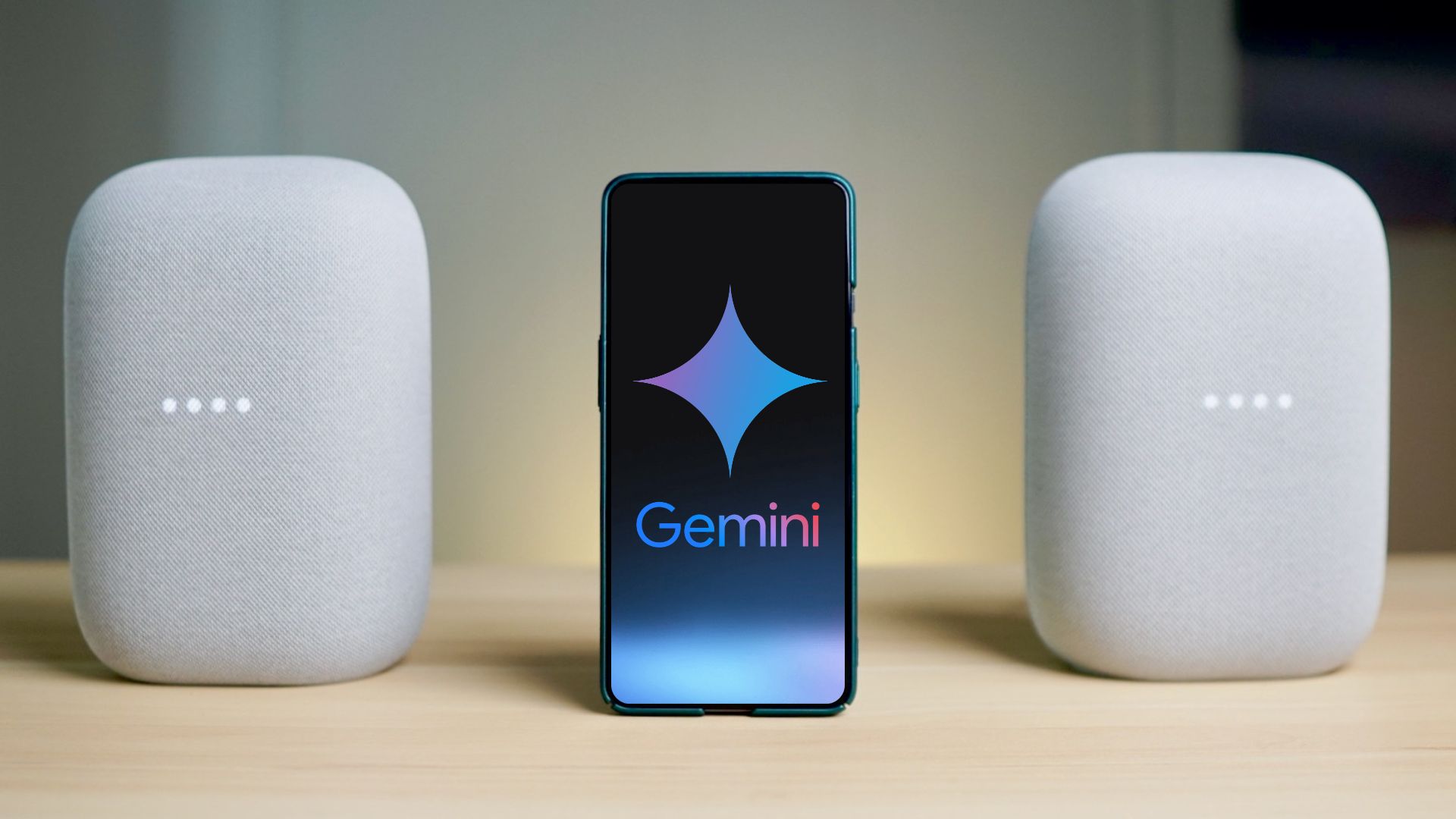
That is the price Google set this week to put a conversational AI into your living room. The Google Home Speaker shipped June 25 at $99.99, the company's first new smart speaker in six years, and the first built from the ground up around Gemini rather than the old command-and-response Assistant. The number matters because of how small it is. The last great battle for a screen, the phone, cost consumers many hundreds of dollars and locked them into an ecosystem for years. The next surface, the always-on ambient one that sits on the kitchen counter and answers in full sentences, is being seeded as a sub-100-dollar impulse buy, in four colors, across the US, UK, and Australia at launch. Amazon is doing the same with its Claude-and-AI-powered Alexa+ push. When the interface to your home becomes a cheap, conversational AI, whoever supplies that AI owns a new and intimate channel of attention and commerce.
The phone took a decade and a fortune to win. The living room is being bought for the price of dinner. That is how fast the next attention surface is being claimed.



The screen in your hand is full. Feeds are saturated, acquisition is expensive, and the phone is a knife fight nobody is winning cleanly. So this week the smartest money did the logical thing: it went looking for attention everywhere the phone is not. In the living room, where Google shipped a conversational-AI speaker for $99. In live video, where StockX rebuilt sneaker resale around real-time auctions and used goods. On the Croisette and in stadiums, where the advertising industry and the World Cup turned travel, transit, and physical venues into premium, unskippable, captive attention.
The common thread is a migration off the glass. For fifteen years the attention economy meant the smartphone feed. The frontier now is ambient (the speaker, the display, the car), live (the auction, the stream), and captive (the billboard, the seatback, the stadium concourse). These surfaces share a quality the phone has lost: you cannot easily scroll past them. The speaker is in the room with you. The live drop is happening now or never. The screen above the baggage carousel is the only thing to look at.
Attention did not shrink this week. It relocated. This issue reads the week through that move. First the tape, across the whole field. Then the one shift worth reading closely: the exodus off the phone, and where the attention is landing instead.
StockX rebuilt resale around used goods and live video. On June 24, StockX launched StockX Listings, a marketplace for pre-owned sneakers and vintage apparel that directly attacks GOAT and eBay in a secondhand market it pegs at 300 to 400 billion dollars by 2030. It lands alongside the recent debut of StockX Live, a live-auction format chasing the community-commerce model Whatnot pioneered (background: StockX Live debuted earlier in June). A platform built on anonymous bid-ask trading is reinventing itself around used inventory and real-time, face-to-face selling.
The ad industry pushed commerce into travel and transit. At Cannes Lions, which ran to June 26, The Trade Desk built out a commerce media network spanning Uber Advertising, Booking.com, and United Airlines' Kinetic Media, extending retail media's first-party-data model out of the store and into journeys, rides, and flights. The captive moments of physical travel are being turned into shoppable, measurable media.
The World Cup made physical venues the hottest attention real estate on earth. The tournament running across the US, Mexico, and Canada is funneling enormous live audiences through stadiums, transit hubs, and fan festivals, with Fanatics operating official on-site retail and merchandising (background: the FIFA and Fanatics relationship, including a landmark collectibles deal signed in May, predates this window). The most valuable captive audiences this week were standing in concourses, not scrolling.
Live commerce kept compounding offshore. No single Western launch changed the picture this week, but the structural gap stayed enormous, with a recent overview putting China's live commerce on track to clear one trillion dollars in 2026 and video commerce already at roughly a fifth of Southeast Asian e-commerce (background figures). The West's version of this, the thing StockX and Whatnot are racing to build, is still a fraction of that.
On Thursday, June 25, 2026, the market reflected a growing tension in the attention economy: while investors remain obsessed with the "AI buildout" and memory-chip demand, they are simultaneously punishing companies that attempt to pass off infrastructure costs to consumers through price hikes.
The market's performance suggests a "value rotation" within the attention economy. Capital is aggressively moving away from legacy hardware and high-cost "captive" entertainment networks which are seeing demand elasticity issues and toward platforms that facilitate synchronous interaction and low-friction, gamified engagement.
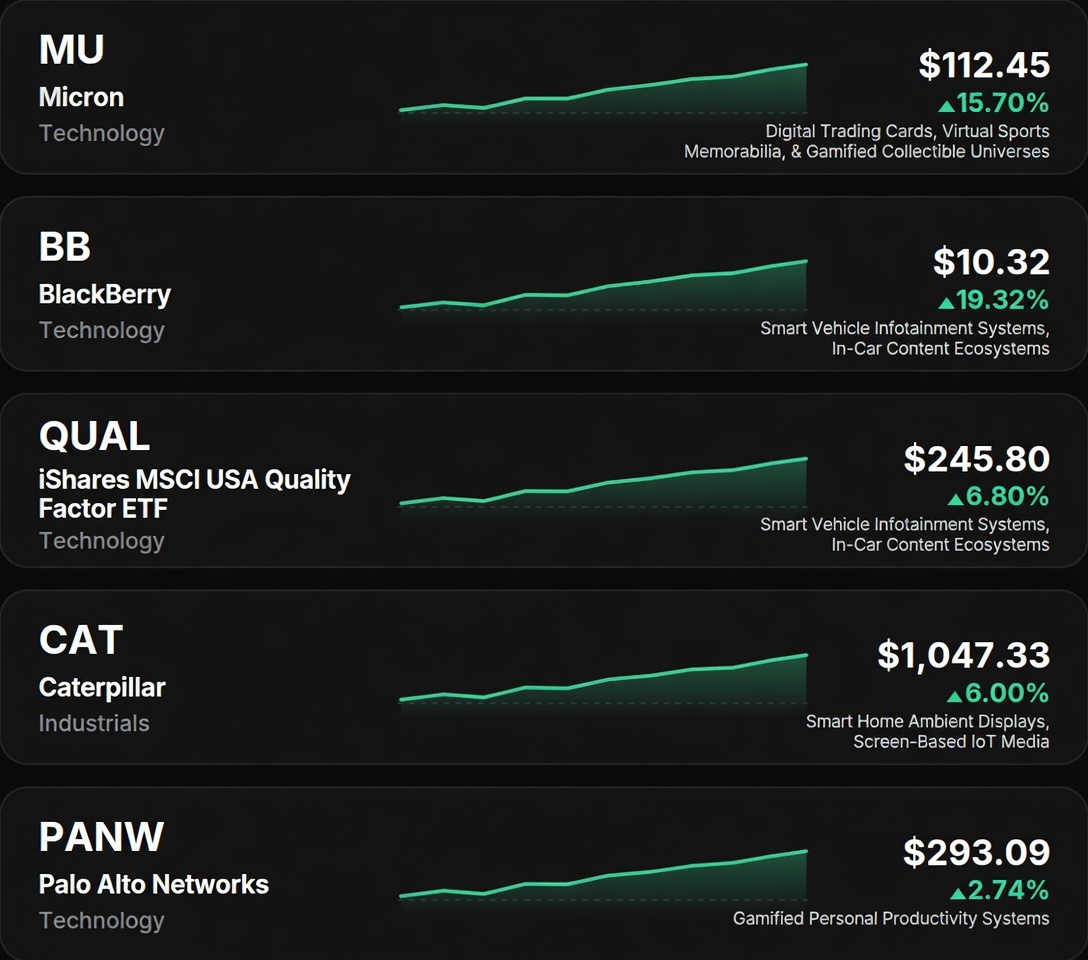
The AI/Memory Infrastructure (MU, QUAL): Micron (MU) and Qualcomm (QUAL) surged, proving that the foundation of the digital attention economy, memory chips and advanced processors, remains the most reliable investment as "smart" environments (like vehicles and IoT displays) require exponentially more processing power.
The Connected Car (BB): BlackBerry (BB) saw a massive surge, highlighting the shift toward smart vehicle infotainment. As cars become "living rooms on wheels," companies that provide the secure software for these media-rich, captive environments are seeing high valuation growth.
Industrial Attention (CAT): Caterpillar's record high reflects the massive capital expenditure (CapEx) required to build the physical data centers and smart-home infrastructure that underpins our digital connectivity.
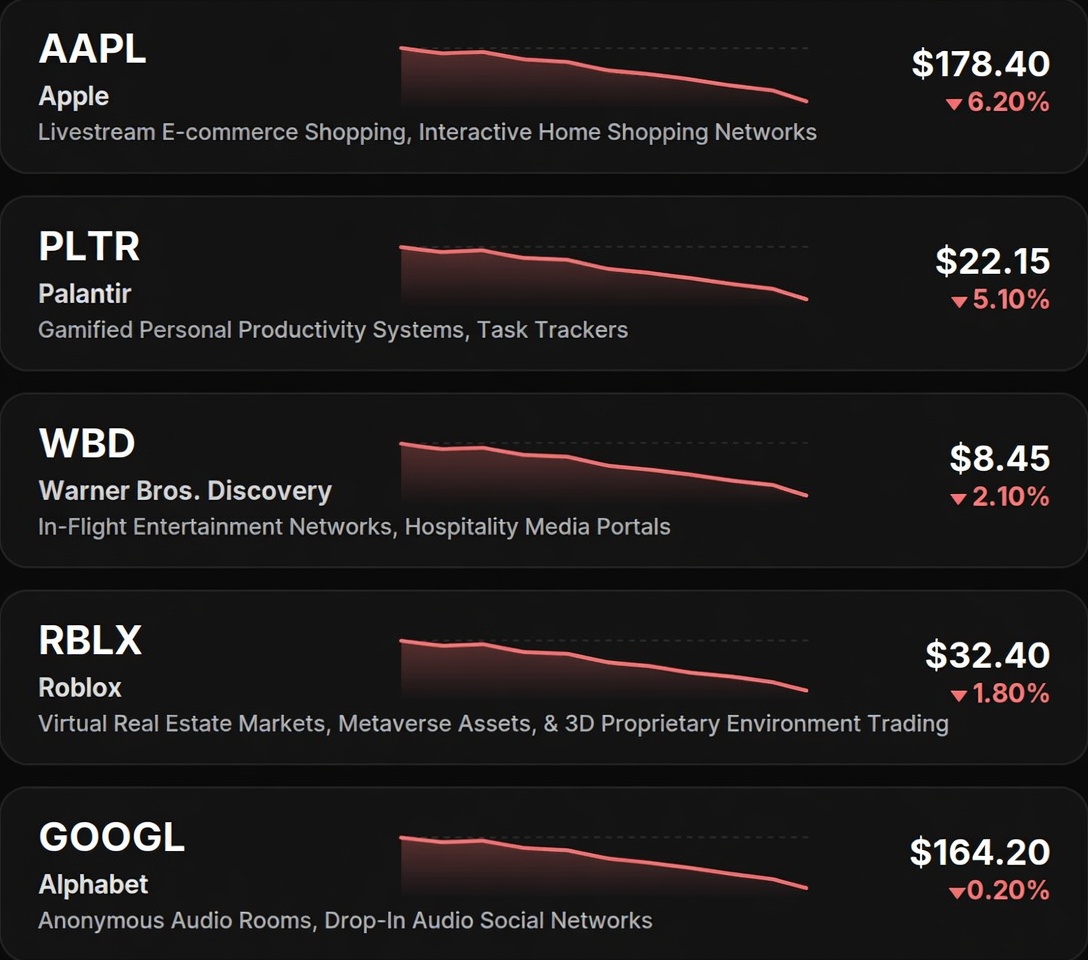
The Price-Elasticity Ceiling (AAPL): Apple's drop highlights a critical turning point: even the most "sticky" ecosystems face pushback when they hike prices for integrated services like home shopping and interactive content, signaling that consumers are reaching their spending limit.
The Software Correction (PLTR): As inflationary pressures hit growth-oriented software, companies focused on "gamified productivity" and enterprise task trackers are being de-prioritized in favor of more tangible infrastructure assets.
Fragmented Entertainment (WBD): Captive audience networks (like those in hospitality and air travel) are struggling as consumers rotate away from legacy streaming portals toward personalized, mobile-first content environments.
Metaverse/Virtual Asset Fatigue (RBLX): Virtual real estate and proprietary 3D environments continue to struggle for sustainable monetization, as user interest shifts toward more immediate, real-world utility in their digital habits.
